Marriott Bonvoy in 2026: The Secret to Finding 1p Per Point Redemptions
You hear the same complaint constantly in 2026. People say dynamic pricing ruined hotel loyalty programmes. They tell you points are basically just fixed cashback now. That is completely wrong.
If you know how Marriott’s pricing algorithm actually behaves behind the scenes, you can still extract massive value from your balance. The benchmark we aim for at Points Uncovered is 1p per Bonvoy point. Achieving 1p means securing £500 of value from a 50,000-point redemption. Given the standard UK baseline valuation currently sits at roughly 0.55p, hitting the 1p mark requires strategy. You have to ignore the average redemptions and target the specific scenarios where the algorithm breaks down.
The math behind the 1p target
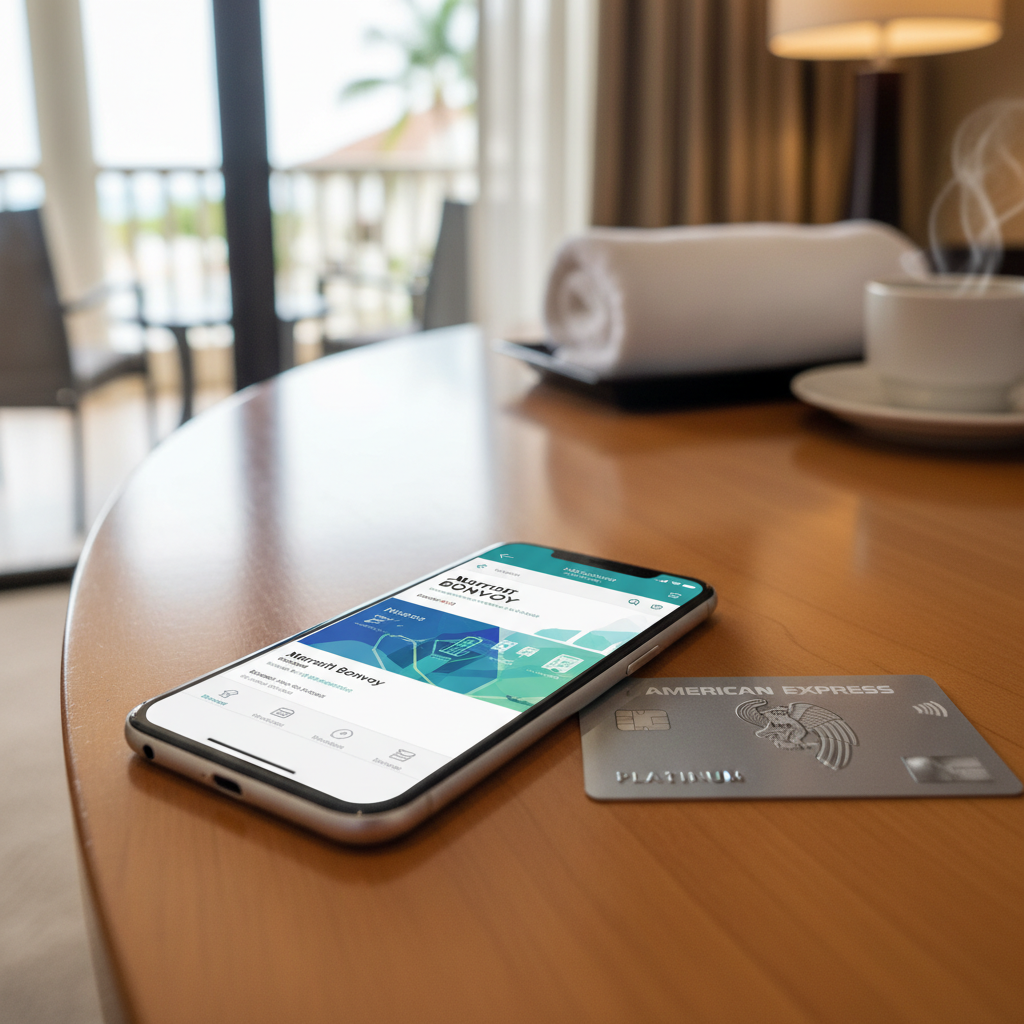
Aiming for 1p per Bonvoy point makes mathematical sense because of how American Express transfers work. American Express UK Membership Rewards transfer to Marriott at a 2:3 ratio. When you achieve 1p per Bonvoy point, you are effectively getting 1.5p per Amex point.
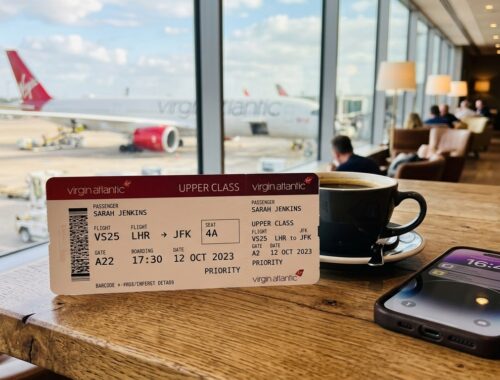
This calculation matters right now. Virgin Atlantic recently increased their saver reward surcharges by up to £400 for UK departures. Avios availability remains highly competitive for premium cabins. If you are sitting on a large Amex balance, airlines are no longer the automatic default for outsized value. Getting 1.5p per Amex point on a hotel stay often beats redeeming for a heavily surcharged business class flight.
Consider the current Amex Platinum UK sign-up bonus of 75,000 Membership Rewards points. That converts to 112,500 Bonvoy points. At a 1p redemption rate, that sign-up bonus alone buys you £1,125 in free hotel stays. You just need to deploy those points correctly.
Exploiting algorithm caps at ultra-luxury properties
The best way to force a 1p redemption is by targeting the absolute top of the Marriott portfolio. Despite operating a fully dynamic pricing model for years, Marriott still employs soft caps in its algorithm. The system rarely allows standard room redemptions to exceed 130,000 to 150,000 points per night.
This creates a massive arbitrage opportunity. Cash rates for luxury travel remain stubbornly high post-inflation. At top-tier properties like The Ritz-Carlton Maldives or the St. Regis Bora Bora, cash rates frequently surge past £1,500 per night. Because the points price hits a ceiling at 150,000 points, the math guarantees a return of at least 1p per point.
Marriott currently operates over 9,000 global properties. The portfolio is constantly shifting. We recently saw the Augustine Hotel in Prague exit the system. You have to monitor the luxury footprint closely. When you find a property charging £1,300 in cash but capping points at 130,000, you book it.
The 2026 event lag strategy
You can beat the dynamic pricing algorithm by exploiting the delay between cash price spikes and points price adjustments during major events. The algorithm relies heavily on historical data. When a massive event is announced, cash revenue management teams react instantly. The points algorithm often takes days to catch up.
We are seeing this play out right now with the June and July 2026 FIFA World Cup in North America. Cash rates in host cities like New York, Miami, Toronto, and Dallas are astronomical. Hotels are demanding £800 to £1,000 a night for standard rooms. Yet, because the algorithm lacks historical precedent for this specific demand spike, points requirements in these cities are lagging. You can still find rooms hovering at 50,000 to 60,000 points.
The same logic applies to major concert tours. When new dates drop, cash prices skyrocket immediately. If you search for points availability on that exact day, you will often find the algorithm hasn’t adjusted the points cost yet. This lag is your window to secure 1.5p or even 2p per point.
Maximising the fifth night free benefit
The single most reliable method for inflating your pence-per-point value is Marriott’s “Stay for 5, Pay for 4” benefit. This applies automatically to award bookings. Under the dynamic pricing model, the system drops the cheapest night in points, rather than taking an average.
This consistently pushes your valuation higher. If you book five nights priced at 60k, 65k, 70k, 75k, and 50k points, the system drops the 50k night. You pay 270,000 points instead of 320,000. On average, this benefit inflates your cpp value by 18% to 22% on a five-night stay. When you combine a high cash rate with a dropped points night, hitting the 1p threshold becomes much easier.
Use the flexible dates calendar on the Marriott website. Dynamic pricing means Tuesday might cost 40,000 points while Wednesday demands 75,000. Slide your five-night block across the monthly view to encompass the cheapest aggregate points cost. A minor shift in your travel dates can save you tens of thousands of points.
The resort fee penalty
This is genuinely impressive but the small print is annoying. Marriott still does not waive resort or destination fees on award bookings in 2026. Hilton and Hyatt waive these fees when you book with points. Marriott refuses to follow suit.
You have to factor this into your math. If a hotel charges a $50 daily resort fee on a “free” room, that is a hard cash cost. You must subtract that fee from the cash price of the room before you calculate your pence-per-point value. A $500 room with a $50 fee means you are only getting $450 of value from your points. It drags down your real valuation and makes hitting 1p slightly harder at resorts.
The 2026 points arbitrage opportunity
Buying points to book a room often works out cheaper than paying the cash rate directly. Marriott frequently runs promotional bonuses that allow you to buy points for roughly 0.7p each.
If you buy points at 0.7p and redeem them using the strategies above at 1.0p, you are securing a 30% discount on the cash price of the room. This is a highly viable arbitrage strategy in 2026. Compare this to Hyatt, which currently sells points at roughly 1.6p each. Marriott’s low purchase price creates a much wider margin for arbitrage.
Never transfer Amex points or buy Marriott points speculatively. Dynamic pricing means the points cost can change overnight. Find the 1p redemption first. Confirm the availability. Then instantly transfer your Amex MR points or buy the required Bonvoy points. Amex transfers to Marriott generally clear within 24 hours in 2026.
How Marriott compares to Hilton and Avios right now
Understanding Marriott’s position requires looking at the alternatives. Hilton Honors is also fully dynamic but operates differently. Hilton is far more aggressive at capping standard room rewards. You will often see standard rooms capped at 80,000 to 95,000 points, or 120,000 to 150,000 for Waldorf Astoria properties.
The problem is that Hilton points are fundamentally worth less. The standard valuation is around 0.35p to 0.4p. Finding a 1p redemption with Hilton in 2026 is virtually impossible unless you find a severe pricing error. Marriott points require less volume to achieve high value.
When you compare Marriott to airline programmes like British Airways Executive Club or Virgin Atlantic Flying Club, the calculation shifts again. The airline surcharges are brutal right now. A “free” business class flight often requires £600 to £900 in taxes and fees. A Marriott redemption, even with a $50 resort fee, requires drastically less cash out of pocket.
My honest verdict on the Marriott Bonvoy programme
The part I keep coming back to is the sheer scale of the portfolio. Yes, the dynamic pricing algorithm requires you to hunt for value. The fact that they still charge resort fees on award stays is deeply frustrating. But you cannot ignore the math.
If you are willing to look for the algorithm caps, exploit event lags, and use the fifth night free benefit, 1p per point is entirely realistic. It provides a highly lucrative exit strategy for your Amex Membership Rewards points that completely bypasses airline surcharges. The value is there. You just have to extract it.
If you want to master your travel rewards strategy, explore more guides on Points Uncovered.


You May Also Like
The New & Improved IHG One Rewards Program Is HERE!
Starting from Zero in 2026: The £1,000 Everyday Spend Blueprint for Your First Reward Flight