
Hotel Points vs Cashback in 2026: UK Credit Card Strategy
Summer 2026 is approaching and mid-tier European hotels are routinely quoting £200 a night. If you are sitting on a stash of American Express Membership Rewards points, you are probably wondering whether to transfer them for free nights or take the cash to offset your daily expenses. I keep coming back to the same hard truth: earning hotel points on daily UK card spend is mathematically losing to cashback right now, unless you book exactly five nights.
Here at Points Uncovered, we see readers constantly agonising over whether to hold out for a luxury redemption or just take a statement credit. The landscape has shifted massively. High cash rates across Europe and the US mean you need a definitive, maths-based verdict for your 2026 strategy.
The raw maths of cashback versus hotel points in 2026
Base hotel point earning on daily UK card spend is mathematically losing to a standard 1 percent cashback card. You have to run the numbers on your specific everyday spending to see this clearly.
Take the American Express Preferred Rewards Gold Card. It earns 1 Membership Rewards (MR) point per £1 spent. If you transfer those to Hilton Honors at the standard 1:2 ratio, you get 2 Hilton points per £1. In April 2026, our data shows a baseline valuation of about 0.4p per Hilton point. Two points at 0.4p gives you an effective return of 0.8 percent on your daily spend.
Now look at the UK Amex Platinum Cashback Everyday Card. It yields 0.5 percent on your first £10,000, and 1 percent thereafter. If you put serious volume through your cards, that 1 percent cashback beats the 0.8 percent return of transferring points to Hilton. Non-Amex UK cashback cards from Visa or Mastercard remain heavily restricted by interchange fees, largely capping out at 0.25 percent. But within the Amex ecosystem, base hotel earning loses to cash.
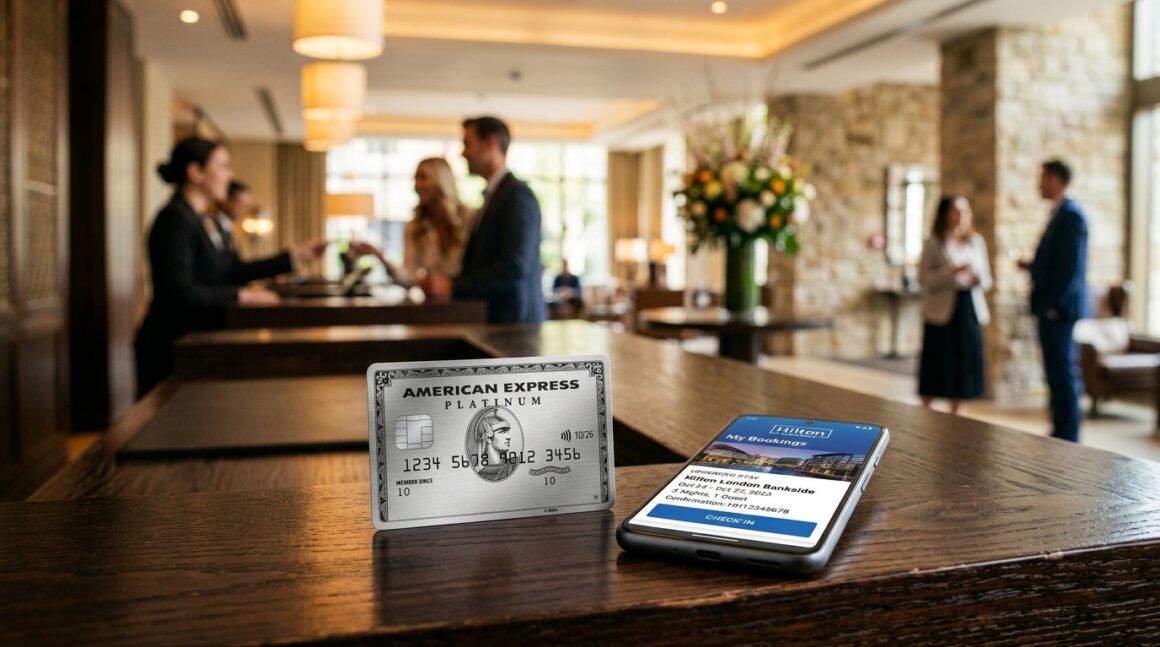
The only exception right now is the massive 75,000 MR point sign-up bonus currently running on the Amex Platinum. Transferred to hotel partners, this yields exactly 150,000 Hilton Honors points or 112,500 Marriott Bonvoy points. Sign-up bonuses absolutely destroy cashback offers. Daily spend is where the maths falls apart.
Why airline surcharges are pushing points to hotels
Airlines are charging more cash than ever for reward flights, making hotel redemptions the safer haven for your points. With Virgin Atlantic recently increasing charges on Saver rewards by up to £400 for UK departures, many readers are understandably pivoting their strategy.
They are saving their actual cash to pay for flights and using their Amex MR points to cover expensive hotel stays. The logic is sound. Hotel redemptions generally attract zero taxes. Hilton still waives resort fees entirely on reward stays. When you book a five-night stay in New York on points, your final bill at checkout is zero. Try doing that with a business class flight from Heathrow.
The Nectar floor dictates your minimum point value
You should never accept less than 0.5p per American Express point on a hotel redemption because you can get exactly that in cash value at Sainsbury’s. This is your hard floor.
Thanks to the ongoing Avios and Nectar partnership, 1 Amex MR transfers to 1 Avios, which converts to 400 Nectar points. That gives your MR points a guaranteed cash floor of 0.5p to spend at Sainsbury’s or Argos. If you are looking at a hotel redemption that yields less than 0.5p per MR point, you are mathematically better off converting your points to Nectar to buy your groceries, and paying cash for the hotel.
Amex is also currently offering up to 12,000 bonus points for adding a free supplementary card. At 0.5p per point, that is £60 in base grocery value. If you leverage those points for a peak hotel redemption, you can stretch that value past £100.
How dynamic pricing changes the Marriott and Hilton equations
Fixed award charts are gone, meaning peak summer nights now cost between 90,000 and 120,000 points at desirable properties. We are fully living in the post-award-chart era in 2026.
If you want to stay at the Conrad London St. James or the Paris Marriott Champs Elysees in July, you will pay a massive premium in points. Because the points price tracks the cash price, it is increasingly difficult to find outsized value. You are generally getting 0.4p per Hilton point or 0.5p per Marriott Bonvoy point, regardless of when you book.
We are also seeing asset-heavy shifts in the luxury market. The Augustine in Prague recently left Marriott, and Kempinski is shifting its strategy. Hotel portfolios are fluid. Locking hundreds of thousands of points into one specific hotel currency is riskier today than holding flexible MR points or pure cash. Flexibility is your best defence against dynamic pricing.
The co-brand card dilemma: Marriott Bonvoy Amex
Holding the UK Marriott Bonvoy Amex is only mathematically sound if you spend heavily at Marriott properties. For everyday spending, it is mediocre.
The card earns 2 points per £1 on everyday UK spend. At 0.5p per Marriott point, that is exactly a 1.0 percent effective return. You are tying your money up in a hotel currency just to tie a standard Amex cashback card.
The maths changes when you check into a Marriott. The card jumps to 6 points per £1 on direct property spend. That is a 3.0 percent return. If you spend £3,000 a year staying at Marriott hotels, the card easily pays for itself. If you just want a card for your supermarket shop and fuel, you are better off with cash.
Strategies to beat the cashback baseline
You need to stack specific hotel benefits or use cashback portals to get a return higher than 1 percent. If you just spend on a card and book standard rooms, cash wins.
The five-night minimum rule
Only transfer Amex MR to hotel points if you are booking in five-night increments. Booking five consecutive reward nights boosts your point value by 25 percent. This perk is available to Hilton Silver members and above, and all Marriott members.
This single benefit pushes the effective return of the Amex Gold card from 0.8 percent up to 1.0 percent. It directly matches the premium cashback tiers. If you are booking a two-night weekend break, you lose this advantage completely.
The cashback and portal stack
If you opt for the cashback strategy, never book direct unless you hold top-tier hotel elite status. You must stack your returns.
Use a 1 percent cashback credit card. Book through TopCashback UK, which routinely offers 4 to 6 percent on Expedia or Hotels.com in 2026. Then collect the online travel agent’s own rewards. This stack easily yields a 5 to 7 percent total cash return. That completely destroys the 0.8 percent baseline return of earning hotel points on daily spend.
The honest verdict: Which strategy wins?
Honestly, I am not convinced the hotel points maths works for most people who just want a few weekend breaks a year. Cash is king for short stays. The 5 to 7 percent return you get from stacking a cashback card with TopCashback and Expedia is too strong to ignore.
Here is the thing: hotel points still win for luxury five-night redemptions. If you have the Amex Platinum 75,000 point sign-up bonus, and you use the fifth-night-free benefit at a £500-a-night resort, points offer incredible leverage. But for your Tuesday morning coffee and weekly petrol, take the cashback or rely on the Nectar floor.
Ready to optimise your next trip? You can explore more guides on Points Uncovered.


You May Also Like
J.P. Morgan 10,000 Avios Promo: A Hard Look at the Hidden Costs

Marriott Nightly Upgrade Awards in 2026: European Brands Actually Clearing Suites