
The Optimal 2026 UK Two-Card Wallet: Ignore the Hype
Social media is currently pushing a £650 metal card you probably do not need. I see people signing up for trendy fintech apps that cap their reward value just to avoid learning how airline miles work. Let’s stop overcomplicating things. If you want a setup that guarantees a business class flight or a luxury hotel stay every 12 to 18 months, you only need two pieces of plastic.
We are seeing a massive wave of fintech fatigue in the UK travel rewards space this year. Readers are feeling the squeeze of post-2025 travel inflation, higher cash fares, and increased card fees. You likely already know what an Avios is, but the noise of 15 different UK reward cards is overwhelming. You need a system that captures every pound you spend without requiring a spreadsheet to manage. This is exactly how to do it.
The exact two-card combination you need right now
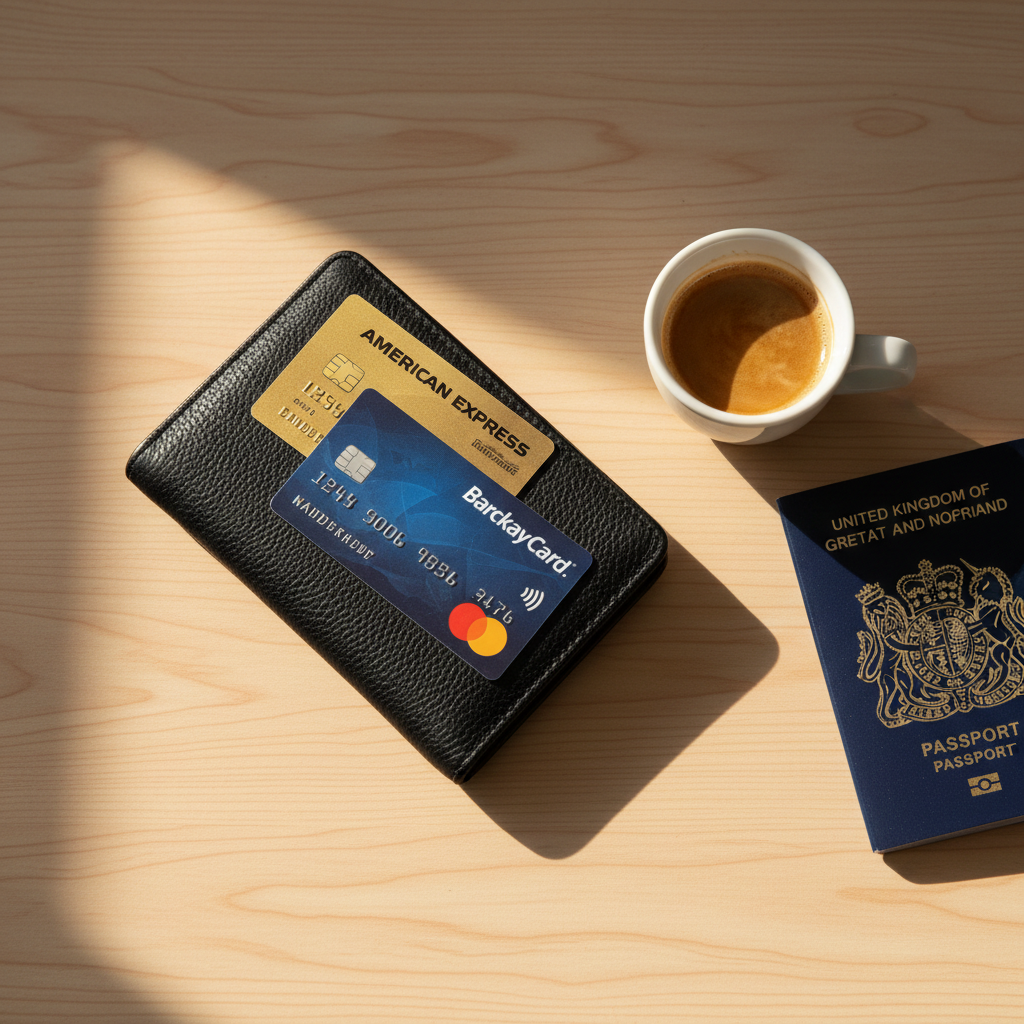
The ideal UK wallet right now pairs the Amex Preferred Rewards Gold Card with the Barclaycard Avios Plus Mastercard. That is the entire baseline. The Amex Gold costs £195 a year—usually free in year one—and earns 1 Membership Reward (MR) point per £1 spent, doubling to 2x on airlines and foreign spend. The Barclaycard charges £20 a month (£240 a year) and generates an aggressive 1.5 Avios per £1 on everything else.
UK Amex acceptance hovers around 82% as of 2026. You need a strong Mastercard for the remaining 18% of your routine domestic spend. Smaller independent cafes, certain B2B suppliers, and local councils rarely take American Express. By holding the Barclaycard Avios Plus, you stop leaving money on the table when Amex is rejected.
This pairing gives you the best of both worlds. You get the robust earning rates and lifestyle credits of American Express alongside the universal acceptance and high Avios accumulation of a premium Mastercard. It is a set-and-forget strategy that quietly builds your balances in the background.
Why flexibility beats pure Avios earning in 2026
Flexibility is your best defence against airline devaluations. The Amex Gold earns MR points, which you can hold centrally and transfer to various partners only when you are ready to book. Right now in June 2026, Amex is running a 30% transfer bonus to Virgin Atlantic Flying Club and a 20% transfer bonus to Hilton Honors. That means 1 MR point suddenly becomes 2.4 Hilton points.
The Avios ecosystem has matured significantly. Finnair is now fully integrated with Avios, often offering cheaper taxes than British Airways. Aer Lingus is running Avios-only flights to New York. However, Qatar Airways recently tightened its rules, quietly locking most people out of booking Avios flights for friends and family. Because points pooling is getting harder, individual earning velocity is more important than ever.
If you put all your spend on a dedicated airline card, you lose agility. Holding MR points means you can pivot away from British Airways if availability dries up or if taxes increase. You are buying yourself options.
Mastering the Barclaycard Avios Plus
You want the paid Barclaycard Avios Plus, not the free version, if your non-Amex spend exceeds £10,000 a year. The free card earns 1 Avios per £1 and requires £20,000 of spend to trigger the Cabin Upgrade Voucher. The Plus version earns 1.5 Avios per £1 and triggers the voucher at exactly £10,000 within a rolling 12 months.
That £10,000 trigger is the sweet spot. Once you hit it, you receive a Cabin Upgrade Voucher that allows you to book a cash or reward flight and upgrade by one cabin class for free. This is incredibly valuable for moving from World Traveller Plus (Premium Economy) into Club World (Business Class) without paying the massive Avios premium.
For anyone paying council tax, nursery fees, or large household bills via Mastercard, hitting £10,000 is straightforward. The £20 monthly fee easily pays for itself through the accelerated earning rate and the lower voucher threshold.
Ignoring the noise: Platinum cards and fintech hype
The American Express Platinum Card now carries a £650 annual fee, meaning you need at least five or six long-haul trips a year to organically justify it via lounge access and insurance. It is mathematically unviable for most beginners. People buy it for the aesthetic and the social media flex, but unless your company pays for your travel, it is a heavy burden to carry.
Then you have the trendy Yonder Full Credit Card. It charges £39 a month—£468 a year—after the trial period. Yonder pitches itself as a faff-free alternative to airline miles. While it offers excellent dining redemptions in London, its fixed-value point system mathematically caps out well below the 1.5p+ per Avios you can achieve on long-haul business class redemptions.
Yonder is great for lifestyle perks, but terrible for long-haul travel leverage. If you read Points Uncovered, you are looking for outsized travel value. Native MR and Avios cards provide that leverage. Discounted dinners are nice, but they do not get you a flat bed to Tokyo.
Practical strategies to offset the fees entirely
You can completely wipe out the Amex Gold’s £195 fee with a few smart habits. The card offers two £5 monthly Deliveroo credits, giving you £120 in annual value. Use these credits on “Collection” orders from local restaurants.
By collecting the food yourself, you avoid the delivery fees and app markups. This turns the credit into genuine cash-equivalent value. Add in the four Priority Pass lounge visits—worth roughly £100 at 2026 walk-up rates—and the card pays for itself if you use the benefits organically.
For the Barclaycard, route your unrewarding spend meticulously. Set up your council tax, water bill, and any HMRC payments to go through the Barclaycard Avios Plus. If your local authority does not accept credit cards directly, use a fronting service like Curve. Be mindful of newer 2026 fronting fees, but even with a small fee, hitting that £10,000 voucher trigger on autopilot is usually worth the slight hit.
Common questions about the 2026 setup
Readers frequently ask how to optimise this specific pairing. Here are the most common hurdles people face when setting up their wallet.
Can I combine the Barclays and BA Amex vouchers?
You cannot use them on the same passenger on the same ticket to double-upgrade. You cannot apply a Companion Voucher to get two-for-one seats and then stack the Cabin Upgrade Voucher to move both seats into First Class. However, you can use them on the same booking reference if applied cleverly—for instance, using the Companion Voucher for two seats, and the Upgrade voucher for a separate solo trip. Honestly, for a beginner, it is generally better to focus your spend to hit one voucher perfectly rather than splitting your spend and missing both.
Why Amex Gold over the British Airways Premium Plus?
The British Airways Premium Plus (BAPP) is an incredible card, but its £15,000 spend requirement for the Companion Voucher is a heavy lift for a beginner. The Amex Gold protects you from Avios devaluations by earning flexible MR points. You can always transfer them to Avios if you need to, but you retain the option to pivot to Virgin or Hilton.
Is the £20 monthly Barclaycard fee actually worth it?
Yes, provided you spend over £10,000 a year on non-Amex transactions. The math is brutal but clear. If you only spend £5,000 a year on Mastercard, downgrade to the free version. If you put serious household bills through it, the 50% boost in Avios earning and the halved voucher threshold make the £240 annual cost a bargain.
My honest verdict on this setup
I am not convinced the maths works for most people trying to juggle four or five different reward structures. Keeping track of rotating categories, split spending requirements, and multiple annual fees is exhausting. The Amex Gold and Barclaycard Avios Plus combination solves this problem.
Keep it boring. This is a system you can trust. You capture every pound of spend at a high rate. You get airline flexibility through Membership Rewards. You hit a highly valuable upgrade voucher without needing a spreadsheet to track your progress. While the Marriott Bonvoy debit card recently boosted its welcome bonus to 40,000 points—showing a push into non-credit products—credit cards remain king for sustained, long-term earning.
Build your base with these two cards. Once you have mastered this setup and taken your first upgraded flight, you can start looking at more complex strategies. Until then, ignore the noise and focus on what works. Ready to optimise the rest of your travel? You can explore more guides on Points Uncovered.


You May Also Like

Beating IHG Dynamic Pricing: Maximising 15% Award Sales in 2026
How Many Avios To Fly Business Class?