The Mathematics of Buying Points in 2026: When 160% Bonuses Are Actually a Trap
Airlines and hotels want you to think a 160% bonus on points is a rare gift. It isn’t. Right now, loyalty programs are treating points sales as high-margin revenue generators to offset softening cash fares and shifting route networks.
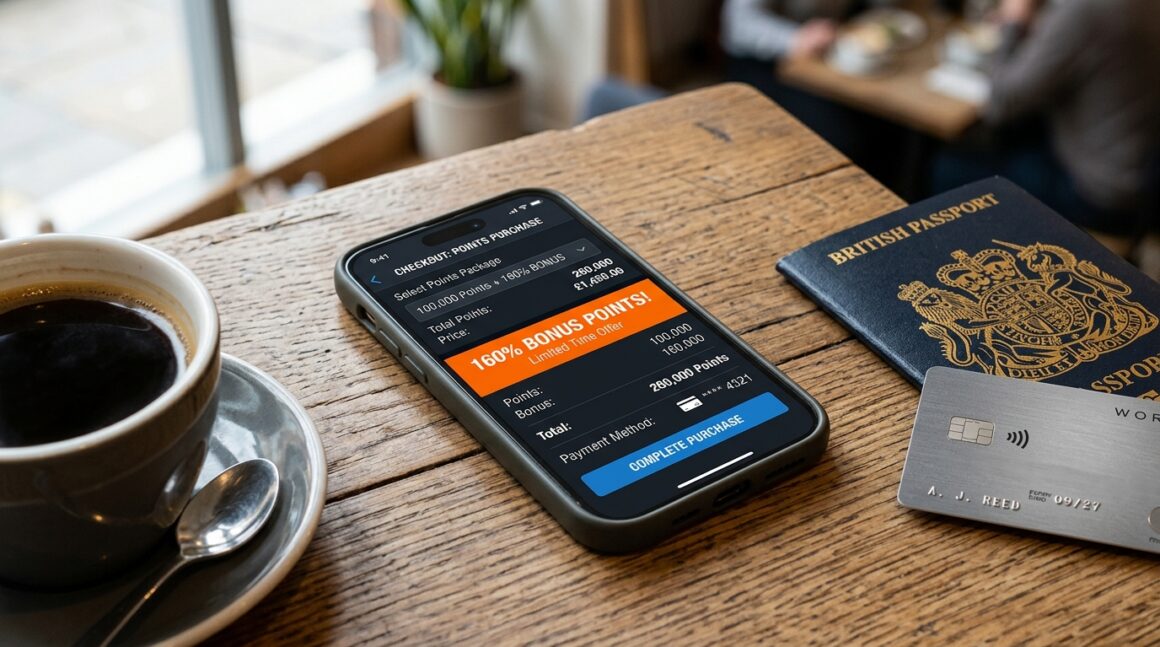
You have probably seen the emails. Avianca LifeMiles offering up to 160% extra. British Airways giving away two lots of one million Avios. Hilton Honors running its standard 100% match. The marketing is designed to induce a fear of missing out, especially if you are trying to piece together a family holiday for later this year. But the maths behind these promotions has shifted dramatically in April 2026. Here is the reality of what you are actually paying for when you click buy.
Why 160% bonuses are rarely what they seem
The percentage attached to a points sale is a complete distraction. The only metric that matters is your cost per point, combined with the current reality of reward seat availability. Avianca LifeMiles is currently running a massive “Up to 160% Bonus” on purchased miles. While that number sounds unprecedented, the actual cost floors out at 1.27 US cents per mile, which is roughly 1.01p in GBP.
Paying 1.01p per mile is not a terrible rate in isolation. The problem is what happens next. United Airlines has recently tightened Polaris lounge access for Star Alliance partners, directly affecting LifeMiles buyers. Furthermore, LifeMiles is notorious for phantom availability. You will see a Lufthansa First Class seat available, transfer your cash into miles, and then the checkout screen throws an error. You are now trapped holding miles you cannot use, effectively giving the airline an interest-free loan.
The actual cost of buying airline miles in 2026
Buying airline miles speculatively used to be a reliable way to secure cheap premium cabin travel. Today, the landscape requires an exact calculation of taxes, fees, and alternative earning methods before you even consider reaching for your credit card.
Why buying Avios outright is mathematically obsolete
British Airways regularly runs 50% bonus promotions on Avios purchases. During these sales, you pay around 1.2p per Avios. Honestly, I’m not convinced the maths works for most people here. Using the BA Avios Balance Boost feature allows UK readers to multiply their earned Avios for just 0.92p.
Between Avios Balance Boost, the recent Virgin Red and M&S Sparks partnership for grocery earning, and basic credit card spend, buying Avios outright is a last resort. If you are paying 1.2p per point, you are overpaying.
The Virgin Atlantic surcharge reality
Buying Virgin Points for a transatlantic redemption requires factoring in the latest 2026 Virgin Atlantic Reward Flight taxes and fees. These currently sit at roughly £450 to £550 for UK to US Upper Class routes. Buying the points is only half the cost.
If you buy 100,000 Virgin Points during a promotional sale, you might spend £1,000. Add the £500 in surcharges, and your “free” flight has cost you £1,500. You need to check the cash price of that Upper Class ticket on your specific dates. If the cash fare is £1,800, you have saved £300. That is a win, but it is hardly the 80% discount the travel hacking influencers promise.
The Iberia availability drought
As of early 2026, Iberia Avios reward availability has severely dried up. Buying Avios specifically to exploit the classic Madrid to Americas sweet spot, which historically required just 34,000 Avios to reach New York in business class, is currently a massive risk due to a complete lack of inventory. Do not buy points for this route unless you can see the exact seat you want right now.
Do hotel point sales still work with dynamic pricing?
Dynamic pricing is the norm for hotels in 2026. Buying hotel points speculatively is a guaranteed loss for standard rooms. It only works if you are buying a small top-up amount to reach a specific redemption, or buying exactly enough to trigger a 5th Night Free award at a luxury property where cash rates exceed £800 per night.
The Hilton Honors 100% baseline
Hilton Honors is running its standard 100% bonus, pricing points at 0.5 US cents each, which is approximately 0.40p GBP. Because Hilton prices its standard room rewards dynamically based on the cash rate, the maths is incredibly tight. You will rarely find a standard room where buying points at 0.40p saves you more than a few pounds. The only time this works is at extreme high-end properties like the Waldorf Astoria Maldives, where the points price is capped but the cash price floats into the thousands.
The return of Hotels.com sets a new floor
The return of the classic Hotels.com Rewards program, which is essentially a flat 10% rebate on your bookings, sets a hard floor for hotel math in 2026. If buying points and booking a reward night does not yield a discount greater than 10% off the cash rate, it mathematically fails against simple online travel agency bookings. You are better off booking via Hotels.com, earning the stamp, and keeping your cash liquid.
The Marriott Bonvoy Amex alternative
If you need a large chunk of hotel points, buying them is rarely the best route. The welcome bonus on the UK Marriott Bonvoy Amex has just tripled to 60,000 points. Buying 60,000 Marriott points directly during a standard 30% or 40% promo costs roughly £450 to £500.
The credit card has a £75 fee. Earning 60,000 points for a £75 fee means you are acquiring them at 0.12p per point. This destroys any points sale math currently available on the market.
The hidden fees that destroy your purchase margin
Most major points sales transact in US Dollars. LifeMiles, Hilton, Marriott, and IHG all use Points.com as their backend processor, and they bill in USD. A 3% non-sterling transaction fee on a standard UK credit card pushes the LifeMiles cost from 1.01p to 1.04p per mile. That 3% fee eats directly into your margin.
You also have to factor in UK Air Passenger Duty. High taxes on departures from London mean that even if you acquire the points cheaply, the final cash outlay remains high. This is why buying points to fly economy is almost never a good idea.
Practical rules for buying points safely
If you are determined to buy points in 2026, you need to treat it like a financial transaction rather than a shopping spree. Here is how I approach it over at Points Uncovered.
- Never buy points speculatively. Find the exact flight or hotel on your exact dates first.
- Do a test booking. Go all the way to the checkout screen to ensure it isn’t phantom availability. Only then open a new tab and buy the points.
- Calculate the true cost. Add the cost of the purchased points, the taxes and fees, and the 3% FX fee if applicable. If this total is not at least 20% cheaper than the cash fare, do not buy the points.
- Always use a 0% FX card for points purchases billed in USD. If you use a standard high street bank card, you instantly lose 3% of your value.
My honest verdict on buying points in 2026
The era of buying points to fund a cheap luxury holiday without a specific plan is over. The redemption side is simply too hard now. British Airways has dropped routes like Jeddah and slashed Gulf flights, making the remaining seats highly competitive.
Here’s the thing. Buying points only makes sense today if you are bridging a specific gap for a confirmed booking. If you are 20,000 Avios short of a business class seat to Tokyo that you can see is available right now, buy the points. If you are hoping to maybe fly to Los Angeles next summer and think a 160% LifeMiles bonus looks like a good deal, keep your credit card in your wallet.
For more honest analysis of current travel reward strategies, explore more guides on Points Uncovered.


You May Also Like
Hilton Coronavirus Cancellation Policy
Get 40000 Marriott Points With The Marriott Bonvoy Amex