
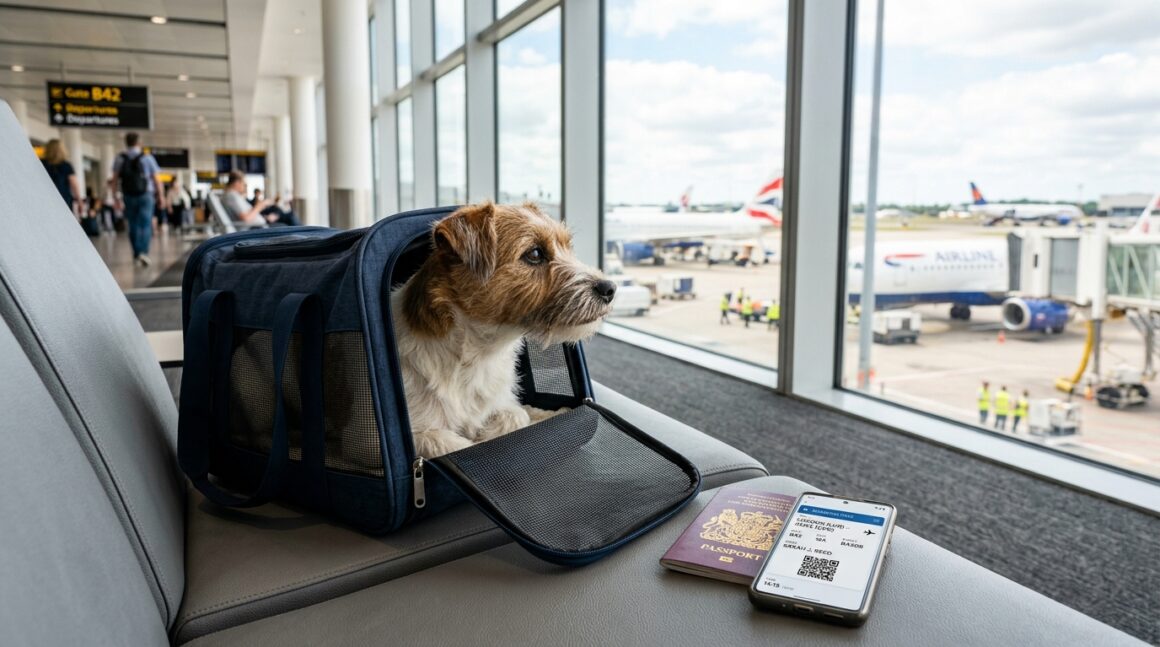
Flying with Pets on Points in 2026: Navigating UK Rules and Fees
You finally found two Club Europe reward seats to Athens for the start of the summer holidays. The flights cost 40,000 Avios plus £1, leaving your travel budget largely untouched. Then you call British Airways to add your spaniel to the booking, and the reality of UK pet travel in April 2026 hits you: a £1,200 cargo fee that you cannot pay with points.
Taking a pet abroad has become a massive cash drain for UK points collectors. Between the permanent loss of the UK-issued EU Pet Passport and surging airline cargo fees, the logistics are miserable. We constantly hear from Points Uncovered readers who have millions of points but are abandoning their holiday plans because the cash cost of bringing the dog is higher than a luxury hotel stay.
Here is the truth about flying with pets on points right now. The system is rigged against UK departures, but there are specific workarounds if you know how to use partner airlines and alternative routes.
The reality of UK pet travel rules in 2026
The UK Civil Aviation Authority completely bans pets from arriving in the UK in the aircraft cabin. The only exception is for recognized assistance dogs. Every other pet flying into the country must arrive as manifested cargo in the hold, regardless of the airline you fly or the size of the animal.
This is the single biggest hurdle for UK travellers. You can fly out of London with a small dog in the cabin on certain European carriers, but you cannot fly back with them the same way.
On top of the flight restrictions, the paperwork costs are staggering. To take a pet from the UK into the EU, you need an Animal Health Certificate (AHC). As of 2026, UK vets typically charge between £150 and £250 per certificate. An AHC is only valid for 10 days for entry into the EU. Once you cross the border, it covers onward travel within the EU for up to four months. The catch is that it is single-use for entry. You have to pay that £150+ fee for a brand new certificate every single time you leave the UK.
With the new Entry/Exit System (EES) now active at European borders, processing times for pet documents at ferry ports and Eurotunnel terminals have spiked. This is pushing some travellers to look back at flying, only to run into the cargo fees.
Can you pay for pet cargo fees with Avios or Virgin Points?
No. Neither IAG Cargo (which handles British Airways) nor Virgin Atlantic Cargo accept points for pet transport fees. You must pay entirely in cash.
British Airways does not allow pets in the cabin on any route. If you want to fly your dog to Europe on BA, they are going in the hold. Flying a medium-sized dog via IAG Cargo currently starts at around £800 to £1,200 for short-haul European routes. If you are heading across the Atlantic, expect quotes easily exceeding £2,000 each way.
There are strict breed restrictions too. If you have a flat-faced dog or cat, such as a French Bulldog, Pug, or Persian cat, BA and Virgin will absolutely not fly them in the hold due to respiratory risks. Your only options are flying them in the cabin on a non-UK carrier or sticking to ground transport.
Do not expect your elite status to help here either. British Airways recently extended status for some members on zero tier points, but your Silver or Gold card gives you zero leverage with IAG Cargo. There are no priority boarding perks or fee waivers for pet shipments.
Which airlines flying out of London allow pets in the cabin?
Air France, KLM, Lufthansa, and TAP Air Portugal allow small pets in the cabin on outbound flights departing from the UK. If you want to keep your pet with you, you have to look outside the Oneworld alliance.
These airlines strictly enforce an 8kg maximum weight limit, which includes the weight of the soft-sided carrier. If your dog and carrier weigh 8.5kg, you will be turned away at check-in.
Booking these flights on points requires transferring your American Express Membership Rewards to the relevant frequent flyer program. Air France and KLM use Flying Blue. The cash fee for adding an in-cabin pet to a Flying Blue reward booking on European routes is currently €125 per way.
Airlines heavily restrict the total number of pets allowed in the cabin per flight. Air France and KLM typically cap this at three to four pets maximum per aircraft. You have to secure your pet’s spot early.
The Paris and Amsterdam backdoor strategy
Because you cannot fly back into the UK with a pet in the cabin, you have to engineer a multi-modal itinerary. The most effective workaround in 2026 is the backdoor route through France or the Netherlands.
Transfer your Amex points to Flying Blue and book a reward flight into Paris Charles de Gaulle (CDG) or Amsterdam Schiphol (AMS) with your pet in the cabin. You pay the €125 airline pet fee, keeping your animal safely under the seat in front of you.
From Paris or Amsterdam, you rent a car or hire a specialist pet taxi to cross the Channel via Eurotunnel Le Shuttle. Bringing a pet across via Le Shuttle costs a flat fee of £22 per pet each way, plus the standard crossing fee for the vehicle. Your dog stays in the car with you the entire time. This completely bypasses the UK in-cabin arrival ban and saves you thousands of pounds in IAG Cargo fees.
If you are coordinating complex partner bookings to make this happen, watch out for the recent 45-day Avios block. British Airways has been blocking certain partner redemptions from 45 days before departure. You cannot leave these multi-leg pet itineraries to the last minute.
Smart ways to use points to offset unavoidable pet costs
Since you cannot use Avios to pay the vet or the cargo handler directly, your strategy must shift to cash preservation.
The most straightforward method is using your points to cover 100% of the human travel costs, freeing up your cash budget for the pet. If you usually book cash flights and upgrade with Avios, stop. Book full reward flights instead and use the cash you saved to pay the €125 Flying Blue pet fee or the Le Shuttle crossing.
You can also leverage American Express statement credits. When you pay your £200+ AHC vet bill on an Amex card, you can redeem Membership Rewards points to wipe out the charge at a rate of 0.45p per point. Using 45,000 Amex points to clear a £202 vet bill is absolutely not the highest value redemption you will ever make. But if you are cash-poor and points-rich ahead of a summer holiday, it solves an immediate problem.
Securing an EU Pet Passport to dodge AHC fees
If you travel to Europe multiple times a year, paying £200 for a single-use AHC every time is infuriating. The long-term fix is securing an EU Pet Passport.
You cannot get one in the UK. You must register your pet with a local EU vet while you are physically in Europe. If you are taking an extended summer trip to Spain or France, make an appointment with a local clinic. They will often require proof of an EU address, such as a family residence or a long-term holiday rental.
Once your pet is vaccinated for rabies by the EU vet and issued an EU Pet Passport, you bypass the need for an AHC on future trips originating from the UK. You just need to ensure all future rabies boosters are administered by an EU vet before the current one expires. This single administrative task saves you £200 per holiday going forward.
How to book the pet slot before the reward seat
Never book a non-refundable reward flight online without confirming pet availability first. The three-pet cabin cap means flights fill up fast.
Find the reward availability online, but do not click confirm. Call the airline’s customer service line. Tell the agent you want to book a specific reward flight and add an in-cabin pet. They will check the pet allocation for that specific aircraft. If there is space, the agent can book your reward seat and secure the pet ticket simultaneously over the phone. Yes, paying the telephone booking fee is annoying, but it guarantees you won’t be left with a non-refundable flight and a dog that isn’t allowed to board.
My honest verdict on flying with pets
Honestly, I’m not convinced the maths works for flying short-haul with a pet in the hold. Paying IAG Cargo £1,000 to put a dog in the belly of an A320 for a two-hour flight to Malaga is a terrible use of money, and it is highly stressful for the animal.
If you are travelling within Europe, driving and taking Le Shuttle or a pet-friendly ferry is vastly superior for both your wallet and your pet’s wellbeing. Save your Avios for long-haul trips where you leave the dog at home with a trusted sitter.
If you absolutely must fly, the Flying Blue cabin route is the only sensible option for small breeds. It requires transferring Amex points and navigating a train or car ride back to the UK, but keeping your pet in the cabin for €125 beats handing them over to cargo handlers every single time.
Ready to get more out of your travel rewards? explore more guides on Points Uncovered.


You May Also Like
Surviving the June 2026 Uber Avios Devaluation: UK Commuter Strategies

How To Use Your Avios Converted Into Nectar Points For M&S Vouchers