BA Checkout Screen 2026: Reward Flight Saver vs Dynamic Pricing
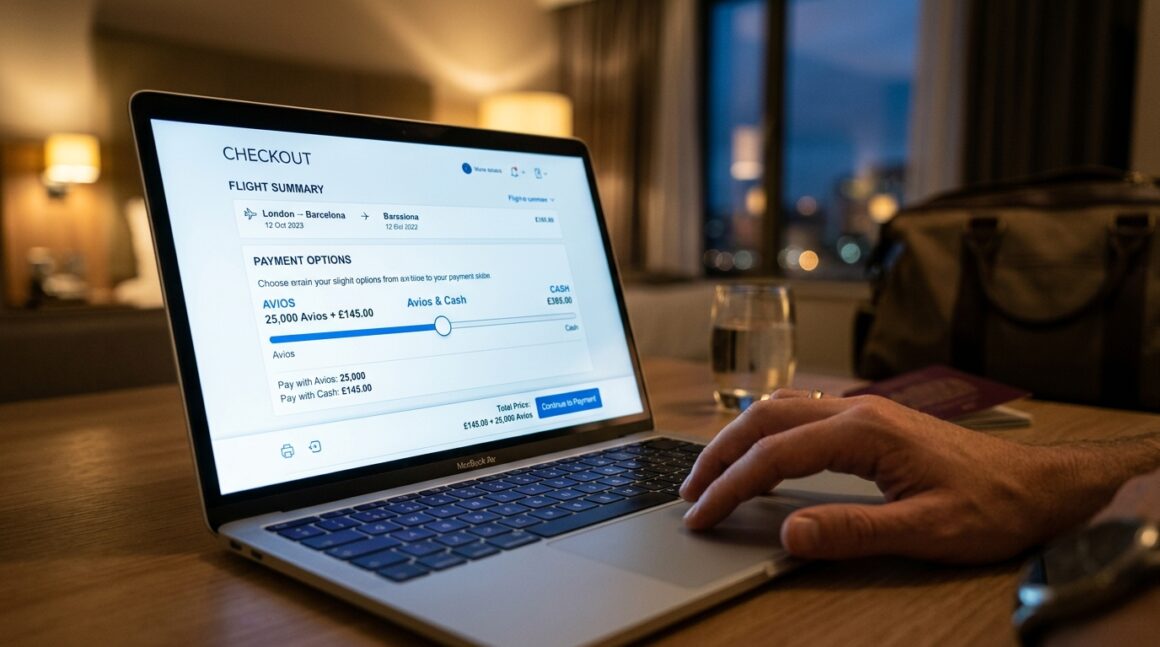
British Airways has turned its 2026 checkout screen into a behavioural psychology test. You finally find the flight you want, click through to pay, and suddenly you are staring at up to six different Avios and cash combinations. The airline wants you to think these are all just different flavours of a reward flight. They are not.
Airlines globally have heavily shifted toward revenue-based dynamic pricing over the last few years. While British Airways has not completely killed the traditional award chart, they are aggressively pushing sub-optimal redemptions to clear Avios liabilities off their balance sheet ahead of the peak Summer 2026 travel season. If you click the wrong button on the checkout slider, you can easily waste tens of thousands of points.
Here is exactly how to read the interface, the mathematics behind the different options, and why you should almost never accept the default price.
What exactly are you looking at on the BA checkout screen?
You are looking at a deliberate mix of fixed-price reward charts and dynamic cash offsets designed to confuse the actual value of your points. When you reach the payment page, British Airways presents a slider or a list of radio buttons offering different ratios of Avios to cash.
Historically, an Avios redemption was a simple transaction. You paid a flat number of points based on the distance flown, plus the actual taxes and airport fees. That system still exists under the banner of the Reward Flight Saver (RFS), but it is now buried among other options that mathematically penalise you.
The interface groups these options together so seamlessly that most people assume the value per point is roughly the same across the board. It varies wildly. You might get 1.5p per Avios on one end of the scale and 0.5p on the other. BA relies on the fact that most passengers will simply look at the cash total and pick the one that fits their immediate monthly budget, without calculating the underlying cost of the points they are burning.
Reward Flight Saver vs Avios part payment: The true difference
A Reward Flight Saver is a dedicated reward seat booked from a specific inventory bucket with fixed pricing. Avios Part Payment is simply applying your points like a low-value gift card to a standard cash ticket.
This distinction matters. When you book an RFS ticket, British Airways caps the cash portion. For example, a standard off-peak return in Club World to the US East Coast via RFS currently prices at 160,000 Avios plus £350. You are getting an outsized return on your points because the underlying cash fare for that Business Class seat might be £2,500 or more.
Avios Part Payment operates on dynamic pricing. If you search for a normal cash flight and reach the checkout, BA will offer you the chance to discount the price using your Avios. The lowest tier on this dynamic slider usually yields exactly 0.5p to 0.55p per Avios. This is mathematically the worst way to spend your balance in 2026. You are taking a high-value currency and trading it in for pennies on the pound.
The £1 trap and why the default slider option is usually a mistake
British Airways often defaults the checkout screen to the highest Avios and lowest cash option. This is a trap that drastically reduces the value of your hard-earned points.
When you see a flight advertised for a massive amount of Avios plus just £1 in taxes, it feels like a total steal. You are flying for practically nothing. But you have to look at what those extra Avios are actually buying you.
The long-haul mathematics
Let us look at that off-peak Club World return to New York. The baseline RFS price is 160,000 Avios plus £350. The default £1 option will typically ask for 200,000 Avios plus £1.
You are spending an extra 40,000 Avios to save £349 in cash. If you divide £349 by 40,000, you get a value of just 0.87p per Avios. This falls well below the target 1p valuation we aim for at Points Uncovered. You are much better off paying the £350 cash and keeping those 40,000 Avios for a future European city break where they will stretch much further.
The short-haul sweet spot
The math changes slightly when you fly closer to home. Zone 1 off-peak short-haul economy flights remain anchored at 18,500 Avios plus £1 or 9,250 Avios plus £35.
If you choose the £35 option, you are holding back 9,250 Avios. The latter offers a solid 1.05p per Avios on the cash offset. For short European hops, the middle options on the slider generally represent the best mathematical sweet spot. I constantly see people draining their accounts on the £1 short-haul options, but paying the small £35 cash fee protects your balance for much better redemptions down the line.
The Nectar floor: How to know if you are losing money
If your checkout option yields less than 0.8p per Avios, you are actively losing money compared to simply spending your points on groceries at Sainsbury’s.
The partnership between Nectar and British Airways creates a hard, undeniable floor for the value of an Avios point in the UK. The standard transfer rate is 400 Nectar points to 250 Avios. We know that 400 Nectar points are worth exactly £2.00 at the till in Sainsbury’s or Argos.
If you convert £2.00 worth of grocery money into 250 Avios, you have effectively paid 0.8p per Avios. If you then reach the BA checkout screen and use the Avios Part Payment slider to get a 0.5p return, you have literally thrown money away. You would have been better off paying cash for the flight and using your Nectar points to buy your weekly food shop.
Partner airlines and the return of massive surcharges
Reward Flight Saver pricing only applies to British Airways and Iberia metal. Booking partner flights via the BA checkout screen reverts to traditional pricing models with steep cash fees.
Many readers assume that because they are booking through the British Airways website, the £350 long-haul Business Class cap applies to everything. It does not. If you find a reward seat on Qatar Airways to Doha, or American Airlines to Los Angeles, you are stepping outside the RFS ecosystem.
When you take these partner flights to the checkout screen, the Avios requirement might look familiar, but the cash surcharges can easily exceed £600 in Business Class. BA simply passes on the partner airline’s fees and their own carrier-imposed surcharges. Always check the operating airline before you get excited about a low-Avios price tag.
Amex companion vouchers and dynamic pricing
The British Airways American Express Premium Plus 2-for-1 voucher can only be applied to dedicated Reward Flight Saver inventory. It cannot be used to halve the cost of a dynamically priced cash ticket.
This is a major point of confusion in 2026. People search for a flight, see the Avios Part Payment slider offering to reduce the cash fare, and wonder why their Amex companion voucher is not triggering. The voucher requires specific reward availability classes — usually ‘U’ class for Club World or ‘X’ class for Economy.
If those specific reward buckets are empty, the voucher is useless for that flight. BA will happily sell you a standard cash ticket and let you offset it with Avios at that terrible 0.5p rate, but your 2-for-1 voucher will stay firmly in your account. You must search specifically for ‘Book with Avios’ inventory to use your Amex benefits.
Practical tips for beating the 2026 checkout screen
The best strategy for navigating the checkout screen is to ignore the default selection, calculate the pence-per-Avios value of the middle options, and refuse the prompt to buy missing points.
- Do the basic math: Before moving the slider, find the difference in Avios between two options and the difference in cash. Divide the cash saved by the Avios spent. If the result is under 1p, move the slider back toward the cash side.
- Ignore the “Buy Avios” upsell: If you are slightly short on points at checkout, BA will prompt you to buy the difference. In 2026, this at-checkout rate hovers around 1.6p per Avios. This is terribly expensive. You are much better off using the Avios Balance Boost feature beforehand, which allows you to multiply past transactions for around 0.92p per point.
- Check the operating carrier: Look for the small text stating “Operated by…” to avoid surprise £600+ surcharges on partner airlines.
- Stick to the middle: On short-haul flights, the £35 or £45 options almost always represent the best mathematical value for your points.
Honest verdict: BA’s push for dynamic pricing
British Airways is actively trying to devalue your points by nudging you toward dynamic pricing, but the traditional sweet spots still exist if you refuse to take the bait.
Honestly, I find the current interface exhausting. It places the burden entirely on the passenger to figure out if they are getting a good deal. The introduction of Avios Part Payment across the board is a clear strategy to normalise a 0.5p valuation. If BA can convince enough people that half a penny is a fair return, they wipe millions of pounds of liability off their books for next to nothing.
The £350 Club World RFS cap remains a genuinely excellent deal, provided you can actually find the reward availability. The system works perfectly well for those who know the rules. But for the casual traveller trying to book a 2027 ski trip, the checkout screen is a minefield. Keep your calculator handy, never accept the £1 default on long-haul without checking the math, and remember the 0.8p Nectar floor.
If you want to master your points strategy and find the actual reward availability, explore more guides on Points Uncovered.


You May Also Like

Heathrow Strikes Called Off After Increased Pay Deal
Fast-Tracking Elite Status in 2026: Why Package Holidays Beat Credit Cards