Flying business from the UK with a baby under 2: APD on a lap infant versus a bought seat
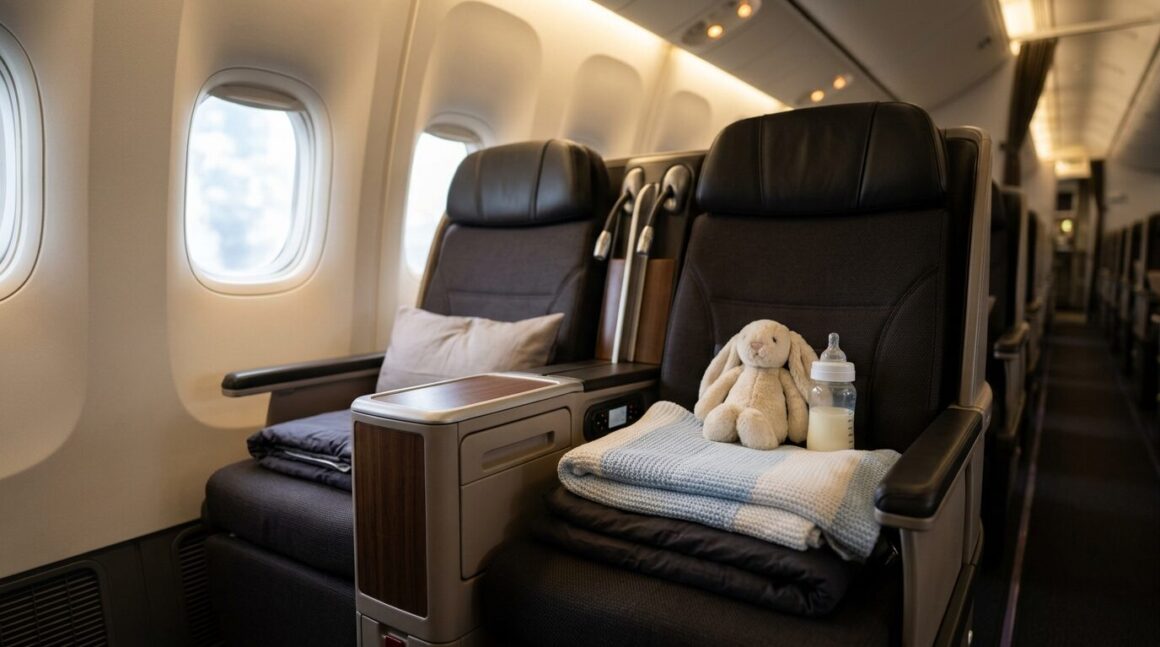
For a baby under 2, HMRC’s Air Passenger Duty (APD) rule depends on the seat, not the cabin. A baby on your lap is exempt in any class, including business and first. If you buy the baby a seat, the exemption applies only in the lowest class of travel. On a UK departure, a bought seat in premium economy, business or first therefore makes the infant liable to APD. The duty is only part of what an airline charges for that seat, so check the airline’s quote.
The rule, in HMRC’s words
HMRC’s exemptions guidance says children under 2 without a seat are exempt from APD and that ‘it does not matter what class they travel in’. It then adds: ‘if a seat is purchased for an infant, they will only by exempt from Air Passenger Duty if they’re in the lowest class of travel’. The typo is in HMRC’s own text.
Once the baby has a seat, the outcome matches HMRC’s general rule for older children: under-16s on the date of the flight are exempt in the lowest class and not exempt in any other class.
The guidance leaves two points open. The passages reviewed here do not define ‘lowest class of travel’, so this article assumes an aircraft that also has an economy cabin. On an all-business aircraft, ask the airline how it treats the seat. The infant sentence also does not say on which date the baby’s age is measured.
What changes when you buy the seat in a premium cabin
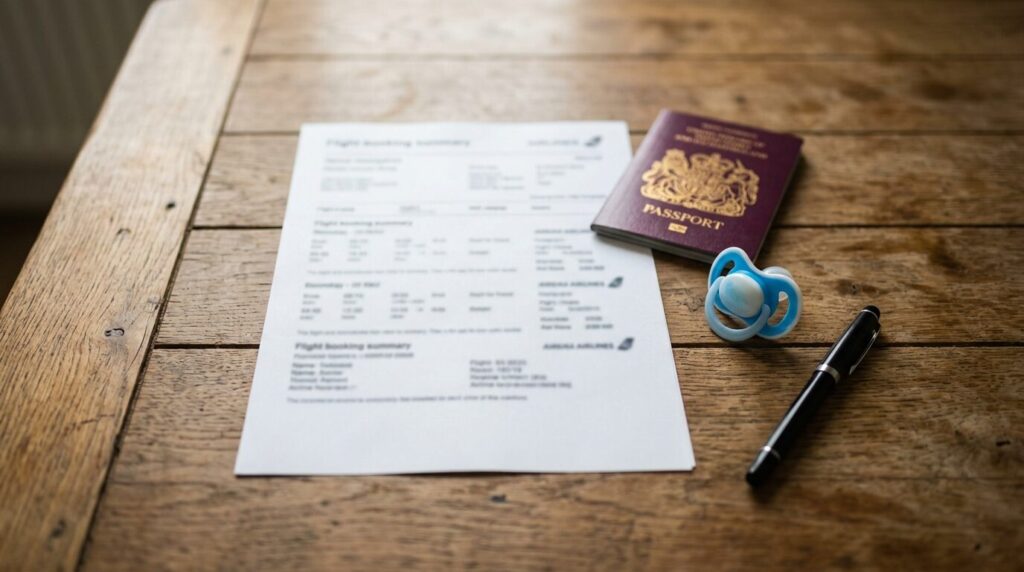
Take two adults flying business from a UK airport with a ten-month-old. The table applies HMRC’s rules and gives no amounts, because the guidance publishes none.
| How the baby travels (UK departure) | Infant’s APD position |
|---|---|
| On a parent’s lap in business | Exempt |
| In a bought seat in business | Liable, because business is not the lowest class |
| In a bought seat in economy, where economy is the lowest class, with one parent while the other sits in business | Exempt |
| In a bought economy seat from the UK, connecting onto a business leg on the same ticket (or conjunction tickets) within HMRC’s time rules | Standard rate applies (see below) |
The split-cabin option in the third row follows from HMRC’s wording. It does mean one parent flies in economy with the baby, and the airline’s own rules on infants and seating still apply.
A seat may still make sense if you want to use an approved car seat or have more space on a long flight. In a premium cabin, though, it also removes the tax exemption.
Connections: when an economy UK departure still costs duty
HMRC says a passenger on a connecting flight is exempt on the second or next flight of the journey. Its connected-flights guidance sets the conditions: connected flights ‘must be shown on the same ticket or on conjunction tickets and meet the time-related rules’. Those time rules depend on whether the next flight is domestic or international, so check the specific limits on HMRC’s page.
The trap is in the next line. If a passenger flies in the lowest class from a UK airport and connects to a flight where they are not in the lowest class, the standard rate of duty applies. If a seated infant’s economy UK departure and business long-haul leg are on the same ticket or conjunction tickets and meet HMRC’s time rules, the infant loses the lowest-class exemption. A separately ticketed flight does not meet the ticket condition, so the two flights are not connected. Even then, a business leg that departs a UK airport carries duty for a seated infant in its own right.
A lap infant is unaffected, because the no-seat exemption applies whatever the class.
One regional exception applies to everyone. Flights leaving airports in HMRC’s defined Scottish Highlands and Islands region are exempt. Flights from elsewhere in the UK into that region are not.
Reading the extra cost of the seat
An airline might price an infant seat as a child fare, an adult fare or something else, so APD may be only part of the gap between the lap and seated prices. Do not assume the whole difference is tax. Before you book:
- Price both options for the same flights and cabin: lap infant and infant with a seat. Note the cash total and, on an Avios booking, the points too.
- Check the taxes and charges for each option. A lap infant in a premium cabin is exempt from APD, while a seated infant in that cabin is liable on the UK departure. If the breakdown itemises UK APD and it appears for a lap infant, query it with the airline before you pay. If APD isn’t shown separately, ask the airline which charges are APD.
- Ask the airline about age if the baby turns 2 before the return or onward UK departure. HMRC’s infant wording does not settle which date counts.
- Check the split-cabin price if one parent is willing to sit in economy with the baby.
If the only reason for the seat is comfort on a short flight, keeping the baby on your lap in a premium cabin means the infant pays no APD. If you want a seat for safety or sleep on a long flight, a premium-cabin seat carries duty. An economy seat is exempt where economy is the lowest class, unless it connects to a premium leg on the same ticket or conjunction tickets within HMRC’s time rules.

You May Also Like
What Can I Do With 10000 Nectar Points?
BA Tier Point Alignment April 2026: Navigating the Final Deadline