
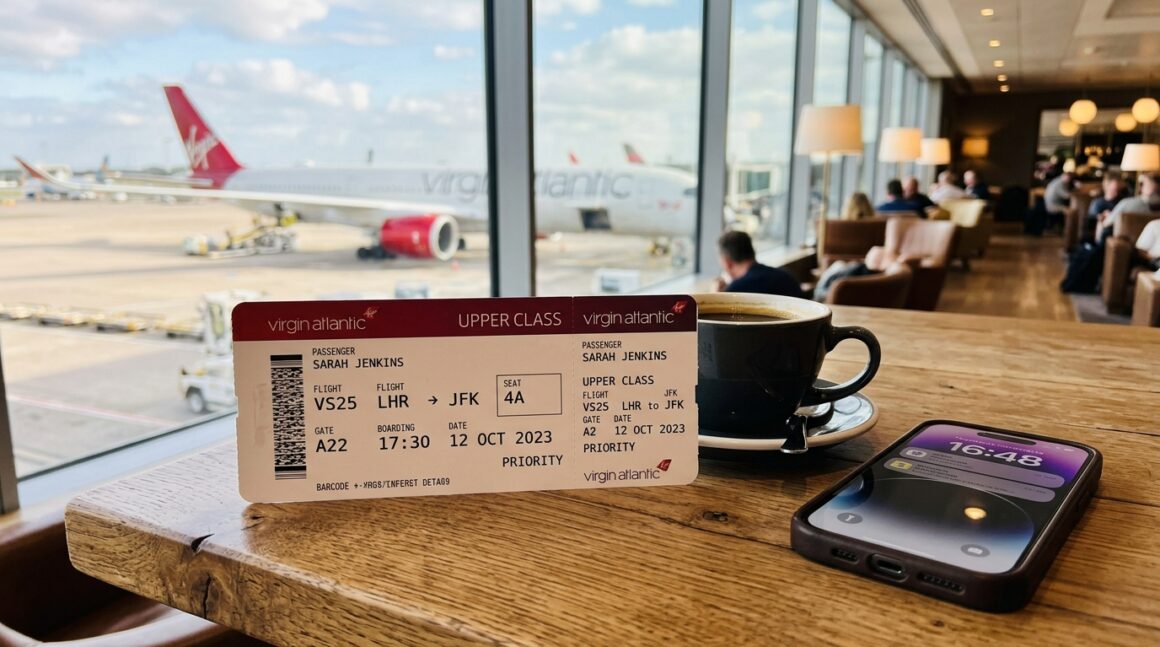
The 2026 Beginner’s Guide to Virgin Points: Escaping the Avios Bubble
British Airways slashing routes to the Gulf and the absolute drought of Iberia availability has left many UK flyers sitting on massive Avios balances with nowhere to go. If you are tired of checking for Middle East or North American reward seats that never materialise, it is time to look at Virgin Atlantic. In April 2026, Virgin is aggressively poaching BA loyalists, and diversifying your points strategy has never made more sense.
Many readers here at Points Uncovered have maxed out their BA Premium Plus vouchers but simply cannot find the seats they want. Virgin Atlantic is offering an immediate, actionable escape route. Between a highly aggressive status match, a vastly improved hard product, and a new high-street partnership that actually competes with Nectar, the Virgin Points ecosystem is finally mature enough to demand your attention.
Why Virgin Points make sense in 2026
Virgin Points make sense right now because Virgin Atlantic is actively capitalising on British Airways’ network cuts by offering lucrative status matches and new high-street earning partnerships. Under CEO Corneel Koster, the airline is pushing hard to win over frustrated UK travellers.
The biggest draw right now is the SkyTeam status match. Virgin is granting up to 23 months of top-tier SkyTeam status when you match your British Airways Executive Club elite tier to Flying Club. This instantly replicates the lounge access and priority boarding perks you are used to, making the jump across alliances virtually painless.
Virgin has also fixed its historical consistency problems. The ongoing Dreamliner refurbishments mean you are highly likely to get a modern seat, and the rollout of Starlink Wi-Fi across the fleet gives them a distinct edge over legacy carriers. Most importantly, Virgin continues to guarantee 12 reward seats on every single flight: two in Upper Class, two in Premium, and eight in Economy. When you log in at calendar opening, those seats are actually there.
Earning Virgin Points without flying
You can earn Virgin Points on the ground primarily through the Virgin Atlantic Reward+ Mastercard, transferring American Express Membership Rewards, and the newly launched Virgin Red partnership with Marks & Spencer.
The Virgin Atlantic Reward+ Mastercard
The Virgin Atlantic Reward+ Mastercard remains one of the strongest non-Amex cards in the UK market. For a £160 annual fee, you earn 1.5 Virgin Points per £1 spent on everyday purchases, and 3 points per £1 spent directly with Virgin entities. Because it is a Mastercard, you avoid the acceptance issues that still plague American Express at smaller retailers and tradespeople.
American Express transfers
American Express Membership Rewards transfer to Virgin Points at a straight 1:1 ratio. Keep your points in Amex until you see a confirmed reward seat you want to book. However, Amex routinely runs 20% to 30% transfer bonuses to Virgin once or twice a year. If you travel to the US frequently, moving a speculative chunk of points over during one of these bonus windows is a smart play.
The M&S partnership
Virgin Red recently integrated with Marks & Spencer, finally giving the programme a high-street earning and burning mechanism that competes directly with the Sainsbury’s and Nectar pipeline. You can now earn Virgin Points on your daily groceries. It removes the friction of building a balance, especially for those who do not want to take out another credit card.
The truth about Virgin Upper Class surcharges
Booking a Virgin Atlantic Upper Class reward flight will cost you significantly more in cash fees than British Airways, with a standard off-peak return to New York demanding £995 to £1,025 in taxes and surcharges alongside the 95,000 points.
This is the part I keep coming back to when comparing the two programmes. British Airways offers Reward Flight Saver pricing, allowing you to pay more Avios to cap long-haul business class taxes at around £350. Virgin does not offer this mechanism. You will part with fewer points than you would with BA, but you absolutely must swallow that £1,000+ cash bill for an Upper Class redemption.
Honestly, paying a grand for a “free” flight stings. But you have to look at the current cash market. Cash fares for transatlantic business class are comfortably hovering around £3,500. Securing that same seat for 95,000 points and £1,000 still yields a high cents-per-point value. It is a genuine bargain, even if the upfront cash component feels heavy.
How the Virgin credit card companion voucher actually works
The Virgin Atlantic Credit Card Companion Voucher triggers after spending £10,000 on the Reward+ card within a 12-month period, but its value is strictly tied to your Flying Club elite tier status.
This is where many beginners get caught out. The British Airways Amex voucher halves the Avios required for two people regardless of your status. The Virgin voucher is notoriously complex. If you are a base-level “Red” member, using the voucher for an Upper Class booking requires you to pay 50% of the points for the second seat. You must hold Silver or Gold status to get that second Upper Class seat for zero extra points.
If you only fly Economy or Premium, the voucher works perfectly well for Red members, zeroing out the points needed for the second passenger. But if you are chasing premium cabins, you need to factor in your elite status before assuming the voucher will behave like the BA equivalent.
Using Virgin Points for short-haul European flights
You can easily use Virgin Points for short-haul travel across Europe by booking SkyTeam alliance partners Air France and KLM through the Virgin Atlantic website.
SkyTeam integration is fully mature in 2026. This is a massive advantage for regional UK flyers who want to avoid British Airways’ Heathrow monopoly. If you live near Manchester or Edinburgh, you can use your Virgin Points to fly KLM via Amsterdam or Air France via Paris to dozens of European destinations. The taxes are generally low, and availability is consistently better than trying to find a BA connection down to London first.
Advanced strategies and loopholes for 2026
The smartest ways to maximise Virgin Points involve upgrading cash fares, capitalising on holiday booking promotions, and avoiding dynamic pricing on US partner airlines.
The Premium to Upper upgrade strategy
The absolute best value in the Virgin ecosystem is booking a cash Premium Economy fare and using points to upgrade to Upper Class. This bypasses the most punishing reward surcharges, earns you Tier Points for the flight, and requires significantly fewer Virgin Points than an outright reward booking. You just need to ensure standard reward availability exists in Upper Class before you book the cash fare.
Leverage the 1,100 Tier Point holiday loophole
If you are matching your BA status to Virgin, you need to retain it. Virgin Holidays is currently running a promotion where you can earn up to 1,100 Tier Points on a single package booking. Gold status requires 1,000 Tier Points. Booking one family holiday can instantly secure or renew your top-tier SkyTeam status for the entire year. You can even pay for part of the holiday using Virgin Points to reduce the cash outlay.
Avoid Delta dynamic pricing
When booking SkyTeam partner Delta Air Lines via Virgin, stick strictly to flights originating in the UK or Europe. Delta flights originating in the US price dynamically and will absolutely drain your points balance. A short domestic hop across the States can sometimes quote at over 100,000 Virgin Points. Stick to the fixed partner award charts for transatlantic legs.
The M&S micro-burn
Do not hoard small balances. If you have orphaned Virgin Points sitting around, the new M&S integration means you can extract a reliable 0.5p per point on everyday treats. Cashing out a few hundred points for a sandwich is a much better strategy than letting them expire while waiting for a long-haul redemption you will never take.
The honest verdict: Avios vs Virgin Points
British Airways comfortably beats Virgin Atlantic on global route network and companion voucher simplicity, but Virgin offers a vastly superior hard product and easier paths to elite status in 2026.
You choose Virgin for the destination, not the network. If you want to fly to Tokyo, Sydney, or South America, Virgin Points will not help you. But if your travel focuses on the US East Coast, Florida, the Caribbean, the Maldives, or Dubai, Virgin is highly competitive. The guaranteed 12 seats per flight remove the lottery aspect of planning a family trip.
My advice is to stop treating loyalty like a monogamous relationship. Keep your BA Amex for European short-haul and the RFS long-haul sweet spots, but grab the Virgin status match and start filtering your non-Amex spend through the Reward+ Mastercard. The Avios bubble is real, and having a secondary points currency ready to deploy is the only way to guarantee you stay at the front of the plane.
Ready to optimise your UK rewards strategy? You can explore more guides on Points Uncovered to master both Avios and Virgin Points.


You May Also Like
The Beginning Of The End For Curve Card? Creation Cancel ALL Cards Used With Curve
Amex Points Value – How Much Are They Worth?